Cash Set Aside or No Gambling Budget?
A no gambling budget or cash set aside can make casino spending clearer. Compare both boundaries and choose one that fits your visit and finances.
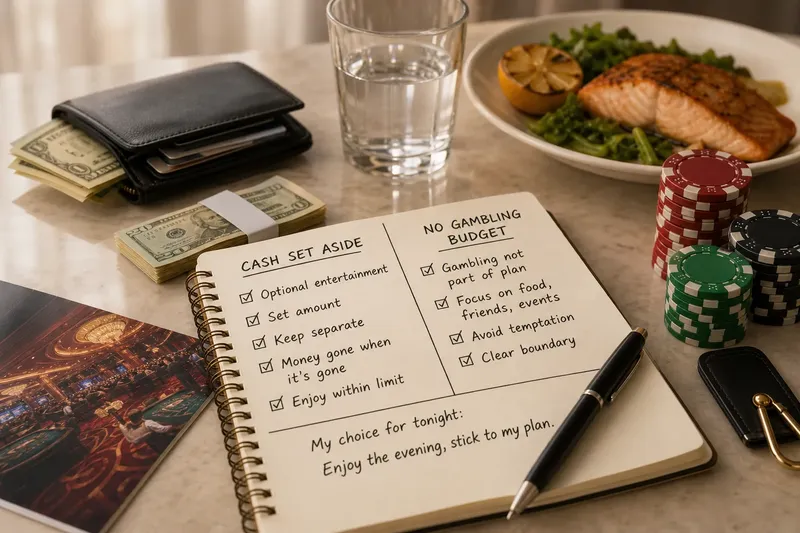
A no gambling budget means deciding before a casino visit that none of your money is for play; cash set aside means choosing a fixed amount you can afford to lose. The difference is simple, but it changes what your boundary asks of you: one rules out gambling, while the other permits it within a limit.
Neither choice is a test of willpower or a promise about what you will do later. It is a decision made in advance, while the rest of your finances and plans are easier to see. The useful question is not which approach sounds more disciplined. It is which one matches your reasons for going, your circumstances, and the kind of evening you want.
Two different boundaries
A cash set aside boundary treats gambling as an optional expense. You choose an amount that could be spent without affecting essentials, obligations, or other plans. If you use it, the money is gone from your entertainment budget. You do not top it up with cash from another purpose.
A no gambling budget sets that amount at zero. You can still visit a casino, meet friends, eat, watch a show, or enjoy the surroundings, but gambling is not part of the spending plan. This can be a deliberate preference, a way to avoid a tempting activity, or a response to concern about past play.
These boundaries are not interchangeable. A small allowance still makes gambling part of the plan; a zero allowance does not. Being clear about that distinction helps prevent a vague intention—“I’ll keep it reasonable”—from becoming a moving target once you arrive.
Choosing a gambling budget
Start with the money’s job, not with the size of the amount. Rent, bills, food, debt payments, savings commitments, and money set aside for other people are not gambling funds. Nor is money you would need to borrow or replace if it disappeared. A play budget comes only from genuinely optional entertainment spending.
Then ask what you want the visit to include. If playing is a small part of a wider outing, a bounded amount may fit. If the main draw is the restaurant, a concert, or company, you may prefer a no gambling budget and spend only on those planned activities.
Say you have decided to join friends for dinner at a casino. Imagine that your optional entertainment money is already reserved for a concert later in the month. A cash allowance would compete with that plan, so you choose no gambling budget and bring only the payment method you need for dinner. The observable result you are aiming for is straightforward: you can enjoy the meal without having to decide at a machine whether the concert money is suddenly available.
If choosing an amount feels difficult, that is useful information. You do not have to invent a figure to prove you can set a limit. A zero budget is a complete, valid boundary.
Cash Set Aside or No Gambling Budget?
How do I choose an amount I can afford?
Look only at discretionary money left after essentials and existing commitments, and consider whether losing the full amount would disrupt any of them. If you would need to borrow, skip a bill, or take money from another plan, choose no gambling budget instead.
Can I bring a card with a cash limit?
A card can make the boundary harder to see because it may connect to funds beyond the amount you intended to spend. If you choose a cash limit, decide in advance how you will keep other payment methods from becoming a backup; if that feels unreliable, a no gambling budget may be clearer.
What if friends expect me to play?
You can say, “I’m here for dinner, not gambling,” without explaining your finances. If the group keeps pressing, make a separate plan for the evening or step away from the gaming area.
What if I have a history of gambling problems?
A zero budget may be more protective than carrying a small play allowance, especially if gambling has caused harm or felt difficult to control. Consider speaking with a qualified counselor or a gambling support service about a plan suited to your situation.
Making the boundary usable
A decision is easier to follow when it has a practical shape. Before leaving, write down which boundary you chose and what it covers. For a cash set aside plan, keep the play money distinct from funds for transport, meals, or other expenses. For a no gambling budget, decide what you will do if friends head toward a table or machine.
- Name the purpose: Decide whether this visit includes gambling or only other activities.
- Separate essential money: Keep bills, travel costs, and planned purchases outside any play allowance.
- Set the limit before arrival: Do not choose an amount while standing in the gaming area.
- Choose a payment boundary: Decide whether you will carry cash, use a card for non-gambling purchases, or leave extra payment options behind.
- Pick a response to pressure: Have a brief sentence ready, such as, “I’m sticking with my plan.”
- Decide what happens when funds are gone: Treat a spent allowance as finished, not as a reason to find more money.
Keep the plan easy to remember. A complicated set of exceptions can turn a firm boundary into a negotiation with yourself.
When the plan shifts
People sometimes arrive with one intention and feel differently once they see the games, hear friends talking, or notice a promotion. A change in mood does not mean the original decision was mistaken. It means the situation has changed, and you can choose whether to keep the boundary rather than revise it on impulse.
If you set aside cash, avoid treating an early loss as a reason to replenish it. If you chose zero, avoid reframing the first bet as “just trying it once.” In either case, money from an ATM, another account, or a friend is not a fresh version of the original budget. It is a change to the boundary, not a continuation of it.
If you find yourself repeatedly bargaining over the limit, pause and leave the gaming area. Contact someone you trust if that would help you follow your decision. Where gambling is causing distress or financial harm, support from a qualified professional or specialist service can help you consider safer options.
A clearer decision before you go
A cash set aside amount suits a visit where limited play is genuinely optional and the money can be lost without affecting other needs. A no gambling budget suits a visit where you do not want to play, where an allowance would strain your finances, or where avoiding gambling is the safer choice. Neither boundary needs to impress anyone else.
For a casino visit, the most useful gambling budget is one you can explain in a sentence and keep separate from money with another job. If that sentence keeps changing, choose the clearer boundary—or make the visit about something other than gambling.